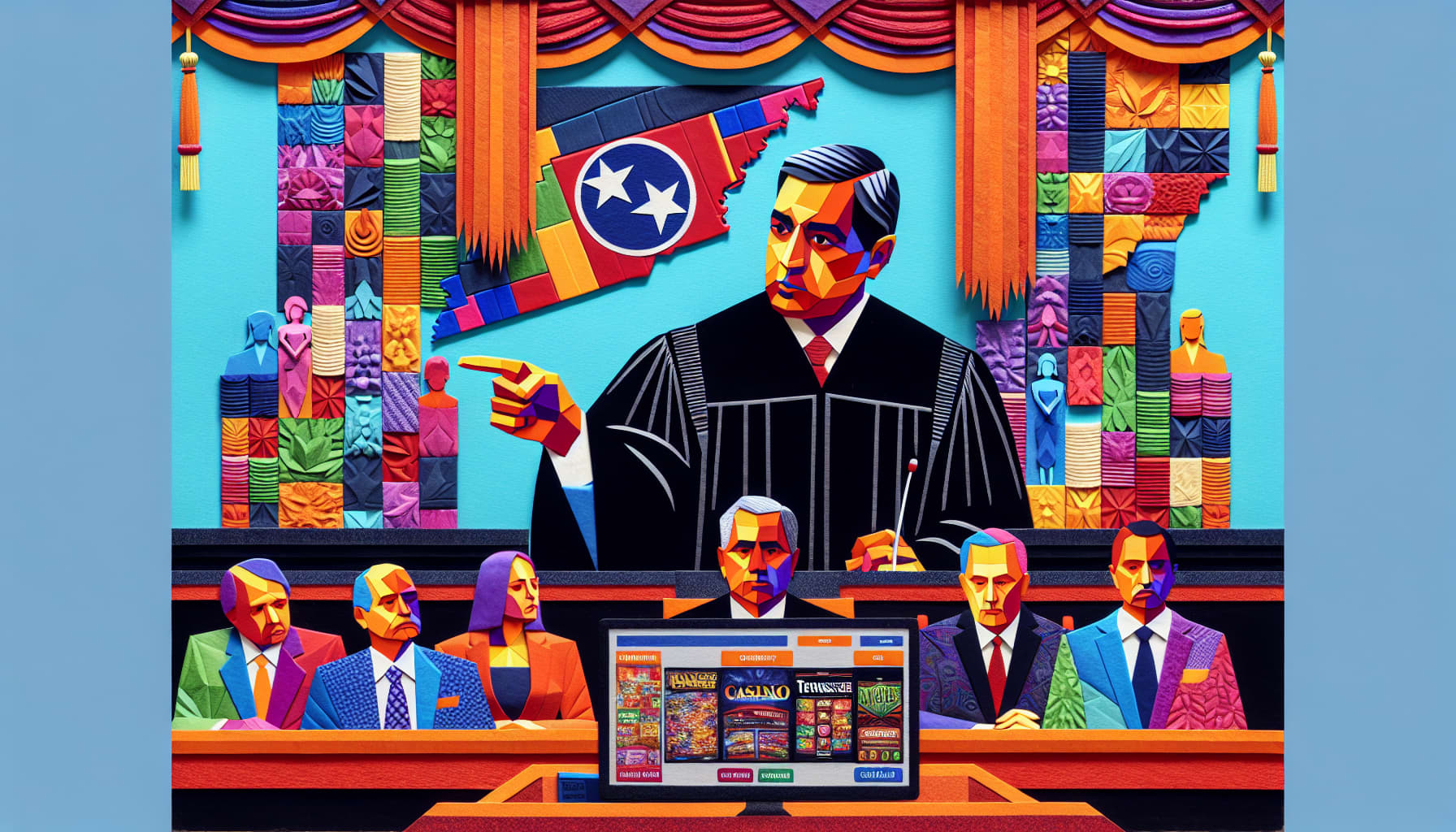
The United States Court of Appeals for the Sixth Circuit has recently mandated that the Tennessee state court handle lawsuits filed against various online social casino operators. On March 16, 2025, the court aligned with a lower court’s verdict, emphasizing that federal courts don’t have the authority over the matter. This legal battle was initiated by Tennessee residents targeting companies like Playtika, VGW Holdings, Aristocrat Leisure, and Product Madness. Plaintiffs argued that these organizations facilitated illegal online gambling platforms, leading to significant financial losses for Tennessee players. All cases were subsequently bundled under a unified appeal.
In their attempt to reclaim lost funds via an obscure Tennessee statute allowing such recovery for illegal gambling losses, plaintiffs found themselves countered by the companies’ move to federal court. The defendants contended these were class actions rightly under the Class Action Fairness Act (CAFA), qualifying for federal diversity jurisdiction. Nonetheless, the Tennessee district court sided with the plaintiffs, ruling that the lawsuits failed to meet federal jurisdiction criteria. The case was further complicated when the Sixth Circuit chose to bypass statutory arguments, focusing instead on whether lead plaintiff, Gina Burt, had legal standing.

In their attempt to reclaim lost funds via an obscure Tennessee statute allowing such recovery for illegal gambling losses, plaintiffs found themselves countered by the companies’ move to federal court. The defendants contended these were class actions rightly under the Class Action Fairness Act (CAFA), qualifying for federal diversity jurisdiction. Nonetheless, the Tennessee district court sided with the plaintiffs, ruling that the lawsuits failed to meet federal jurisdiction criteria. The case was further complicated when the Sixth Circuit chose to bypass statutory arguments, focusing instead on whether lead plaintiff, Gina Burt, had legal standing.
Burt herself hadn’t experienced a direct gambling loss, disqualifying her from federal court under Article III of the US Constitution, which mandates demonstrable harm by a defendant’s actions. The appeals court also dismissed the idea that Tennessee’s law could be likened to a qui tam statute. Essentially, Tennessee’s statutes for reclaiming gambling losses are designed for individual recovery and not public enforcement. With Burt’s standing invalidated, the cases are set to proceed in Tennessee state court, a shift unfavorable to defendants who preferred the federal forum in hopes of swift dismissals.
This unexpected turn could spark a closer look at social casino platforms under state gaming laws. Tennessee’s stringent regulations and broad gambling definitions suggest that

Share the knowledge!

Disclaimer: The content on "hustlenbet.com" is for entertainment purposes only and should not be taken as financial advice. Hustle N Bet LLC makes no representations or warranties that the information provided on the website will guarantee any outcomes or wins. Any strategies or information found on the website are used at your own risk and should not be relied upon for making financial decisions.