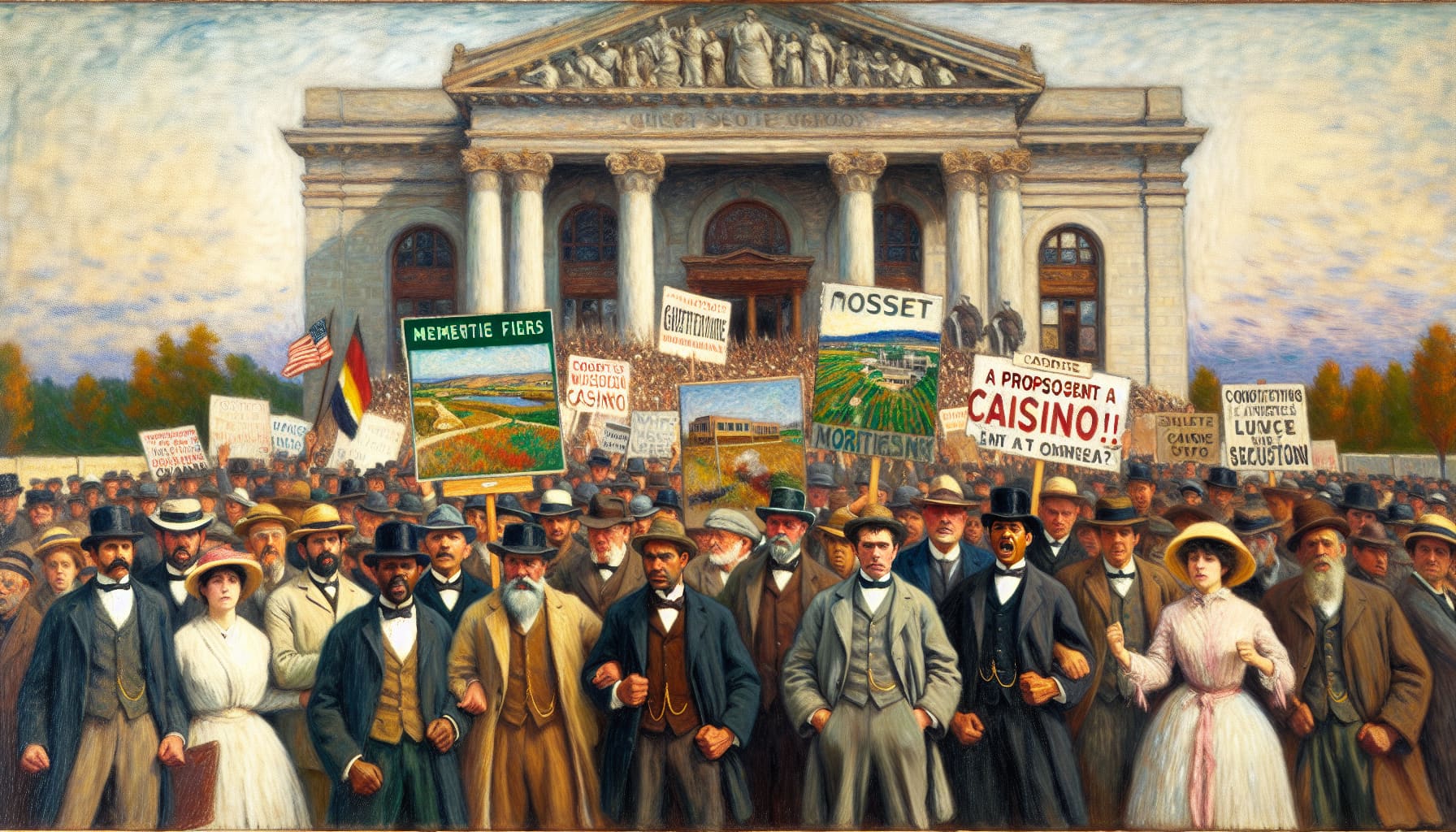
The clash over the proposed tribal casino in Northern California has escalated into a significant legal battle, drawing attention from a myriad of stakeholders. Two Native American tribes and a community group are adamant about halting the casino project, taking their concerns to a federal court in Washington, D.C. At the heart of the lawsuit lies the contention that the chosen site, Strawberry Fields, holds historical and cultural significance, being the alleged location of the 1846 Sacramento River Massacre. The Wintu Tribe of Northern California, the Paskenta Band of Nomlaki Indians, and the Speak Up Shasta Association argue that the U.S. Department of the Interior’s decision to place the land in trust for the Redding Rancheria was made without adequate consideration of these crucial historical facts.
The Sacramento River Massacre, occurring on April 8, 1846, is a somber chapter in American history. On this day, Captain John C. Frémont led U.S. forces in a brutal attack on Indigenous Californians, fatally targeting hundreds of unarmed people, including women and children. Although the exact location of the massacre remains unknown, numerous evidences, such as Frémont’s own diary and oral traditions handed down by W

The Redding Rancheria, consisting of Wintu, Pit River, and Yana tribe members with federal recognition, envisions a grand expansion of their Win-River Resort & Casino. Their ambitious plans include a resort with a casino featuring 1,300 gaming machines and 36 tables, a 250-room hotel, retail spaces, and a conference center. They argue that this development is crucial for their economic growth and sustainability. However, opponents of the project firmly believe it would involve desecrating land of immense cultural and religious significance. Their lawsuit also brings to light environmental concerns, particularly the adverse effects that increased construction and traffic could have on the Sacramento River’s ecosystem, home to at-risk fish species like the Chinook salmon and steelhead trout.
In response, the Redding Rancheria emphasizes that their casino project has undergone nearly two decades of environmental and economic scrutiny. They assert that objections related to the massacre site’s significance only came to the forefront in recent years, despite extensive prior consultations and reviews. This argument highlights the complex intersection of economic aspirations and historic preservation, with both sides presenting compelling cases.
As the legal proceedings unfold, the outcome will undeniably have far-reaching implications for tribal sovereignty, historical preservation, and environmental stewardship. Those invested in the

Share the knowledge!

Disclaimer: The content on "hustlenbet.com" is for entertainment purposes only and should not be taken as financial advice. Hustle N Bet LLC makes no representations or warranties that the information provided on the website will guarantee any outcomes or wins. Any strategies or information found on the website are used at your own risk and should not be relied upon for making financial decisions.