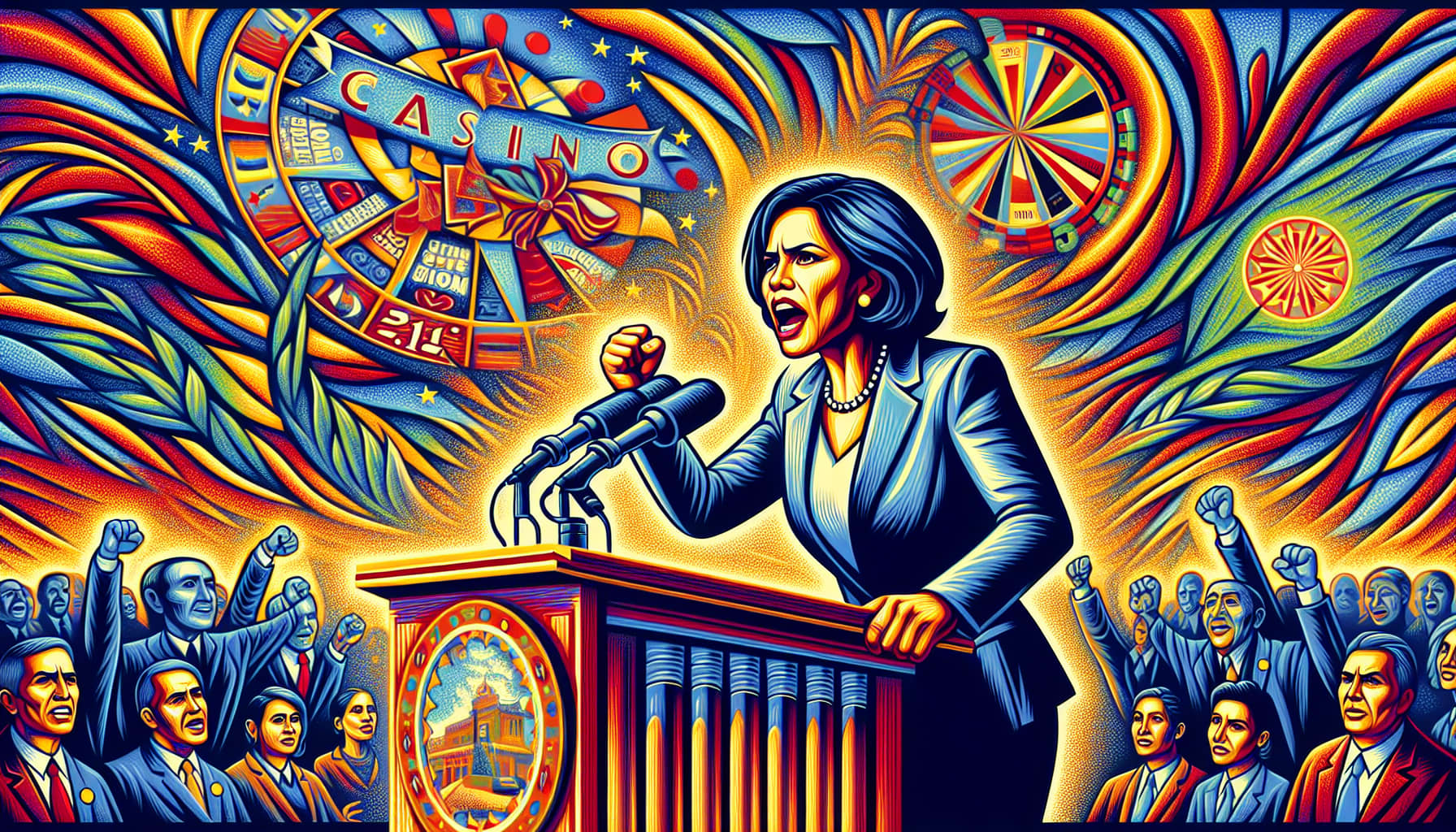
Rep. Dina Titus is at the forefront of a legislative effort to repeal a controversial provision embedded within President Donald Trump’s recent fiscal package, which has sent ripples through the gambling industry. Her new legislation sets its sights on Section 70014 of the “One Big Beautiful Bill Act,” a section that limits the deductibility of gambling losses to 90% of winnings. This change, while seemingly minor, could have cascading effects on high-volume and professional gamblers. Previously, gamblers could offset their winnings entirely with losses, ensuring they weren’t taxed on so-called “phantom income.” Under this new measure, however, a bettor with $500,000 in winnings and $500,000 in losses would still face a $50,000 tax burden—despite not having a net gain.
The gambling community has been vocal about their displeasure with this change, pointing out how this could promote black market gambling and offshore betting options, where the regulatory environment is less stringent and the odds are more favorable. Nevada Congresswoman Dina Titus, undeterred by her initial setback, launched the FAIR BET Act to bring back the full deduction for gambling losses. According to Titus, this move is essential to protect legitimate and transparent gambling activities from being unduly penalized

Interestingly, not every industry expert shares the same level of concern over the new tax rules. Jordan Bender, an analyst with Citizens Capital Markets and Advisory, posits that the changes will mainly impact poker players and other advantage gamblers, who he claims represent only a small fraction of the gambling industry. Bender argues that many high-stakes players were already drifting towards offshore operators long before the legislative change, seeking better odds and fewer restrictions. Consequently, he believes that traditional sectors such as casino and sports wagering—which generally see profits from net-losing players—will remain largely unaffected by the departure of these professional gamblers.
Despite the controversy, other sectors within the broader gambling framework may experience unexpected benefits. Prediction markets like Kalshi and Polymarket, which operate outside the traditional wagering ecosystem, could see a surge in interest as they bypass the new taxation constraints. With the full impact of these tax changes yet to unfold, Dina Titus’ initiative to revert to the previous tax structure appears to hold substantial merit. Protecting the integrity of the regulated gambling sector while ensuring that bettors aren’t unduly taxed on non-existent earnings could provide stability in an industry facing significant upheaval. Rep. Titus’ resolve to safeguard legitimate gambling operations underlines the broader complexities of balancing fiscal policies

Share the knowledge!

Disclaimer: The content on "hustlenbet.com" is for entertainment purposes only and should not be taken as financial advice. Hustle N Bet LLC makes no representations or warranties that the information provided on the website will guarantee any outcomes or wins. Any strategies or information found on the website are used at your own risk and should not be relied upon for making financial decisions.